Drum Arsenal Bundle
Louder, punchier metal drums made easy
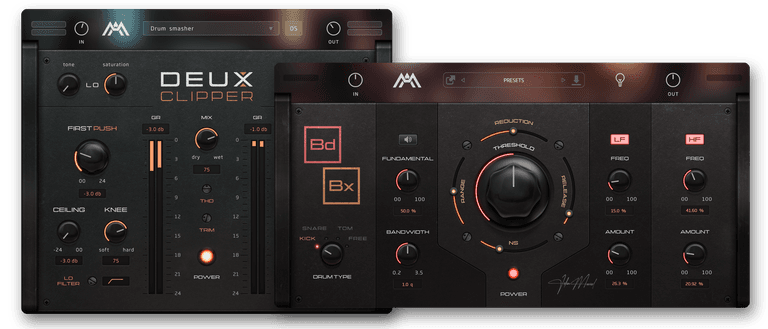
Cymbal bleed comes up every time you push your drums. Bleed Box turns it down first. Then Deux Clipper adds weight to the kick and crack to the snare, and two clip stages make them louder and punchier.
$40
$228 Black Friday 2026

Deux Clipper
Make your mix louder, punchier, and more competitive with one simple tool.
Deux Clipper packs the old-school tricks engineers have used for years into one streamlined tool, so you can get more forwardness, body, and perceived aggression fast.
Sound Examples
The Fastest Way to More Punch and Loudness
Five ways Deux Clipper turns flat, boring productions into loud, forward, competitive records without the usual plugin pileup.
Turn flat, polite drums into loud, forward, record-ready impact without building a messy chain of clippers, saturators, and routing tricks. Catch sharp peaks, thicken the body, and push more punch through your mix in one move using the same dual-stage clipping approach pros use to squeeze out competitive loudness. Lock onto the low-end and top-end sweet spots that make kicks feel bigger and snares crack harder then feed them harmonics until the whole track feels more aggressive. Add the subtle heat, body, and clarity of driven analog signal paths without harsh EQ boosts, brittle clipping, or the usual “why did my mix fall apart?” moment. Go from plugin-stacking and second-guessing to fast, confident decisions in a single window and get the sound of a full punch-shaping chain without the workflow drag.
Sound Examples

Why One Clipper Isn’t Enough Anymore
The old one-clipper approach can only take you so far. Today’s productions demand more control, more punch, and a smarter way to shape loudness.
Clipping has been one of the secret weapons pro engineers have used for decades to make tracks hit harder, feel louder, and cut through with more punch. But today’s productions are denser, more aggressive, and more competitive than ever — and a single clipper often isn’t enough to get the job done.

Add Harmonic Weight Where It Matters Most
Inspired by old-school analog tricks redesigned to inject punch, body, and snap into your signal before clipping even begins.
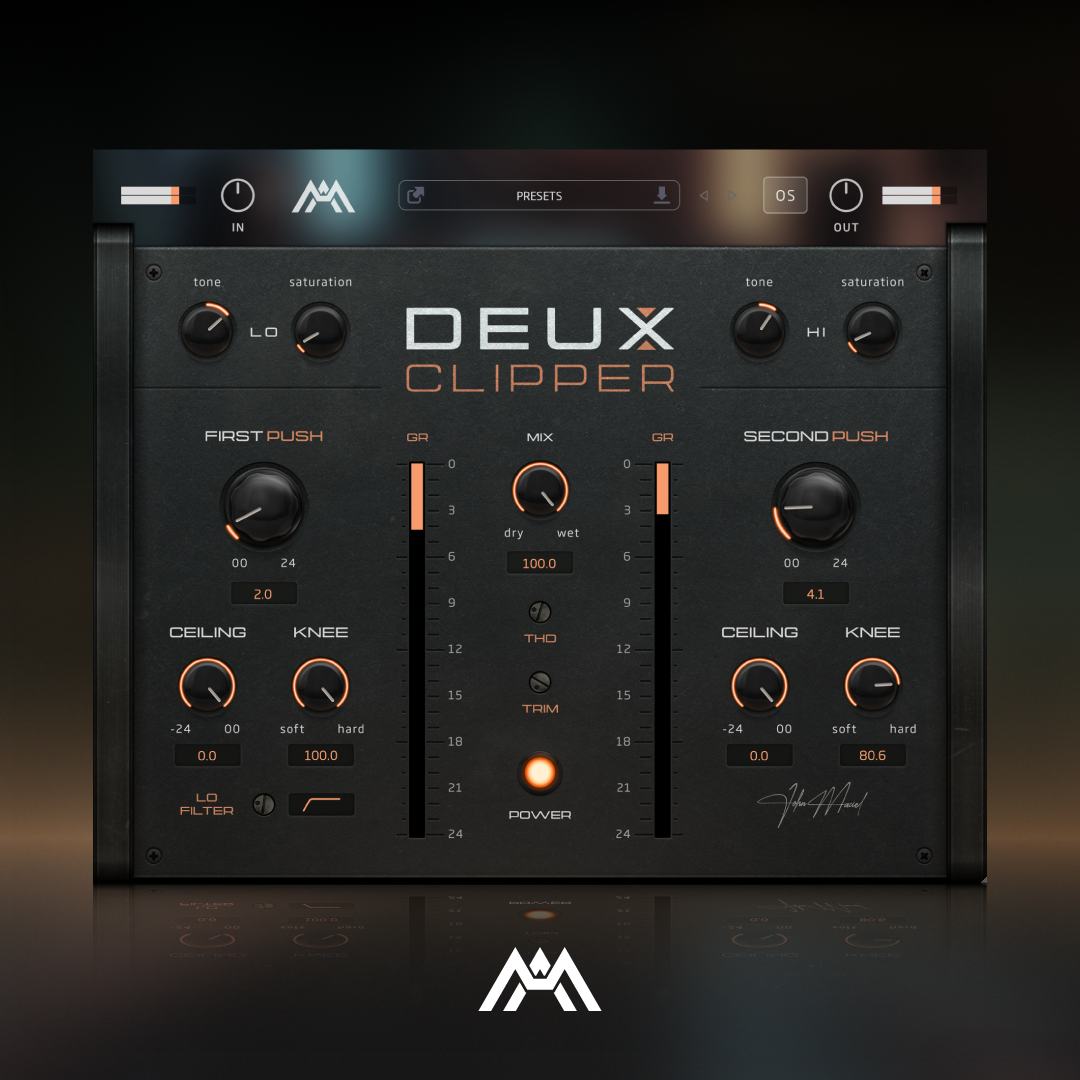
For decades, pro engineers have used a subtle analog trick to make tracks feel bigger, richer, and more alive before they ever hit the console. By bypassing the EQ or compression section on certain pieces of hardware and simply driving the analog circuit itself, they could introduce broadband harmonics that added body, clarity, and attitude to the signal. When you combine that old-school trick with modern clipping, it gives engineers an unfair edge in cheating more perceived loudness, punch, and forward aggression out of a track. Deux Clipper brings that into a modern workflow with independent Low and High saturation sections that let you drive extra harmonic distortion into the fundamental zones that matter most before the signal reaches the first clipper stage. Add more low-end weight and impact by feeding the low fundamental, or bring out more snap and bite by exciting the high fundamental. The result is a signal that already feels thicker, punchier, and more energized before clipping even begins.

Push More Harmonics Without Overcooking Your Tracks
Dial back the harmonic intensity when saturation starts getting too aggressive, or bypass the circuit completely for cleaner control.
Sometimes saturation gives you the exact weight, bite, and attitude you want. And sometimes… it gets a little too cooked. That’s why Duex Clipper includes THD Control for both the Lo and Hi saturation sections. It lets you reduce the amount of harmonic distortion being added, so you can keep the punch and energy without pushing the source into harshness or overcooked grit. Click the THD title to bypass the saturation circuit completely, giving you even more control over how much harmonic color is actually being added.

Keep the Harmonic Tone Without Overbaking It
Fine-tune how hard the saturation stages react while keeping the low-end weight and high-end snap you already dialed in.
Once you find the sweet spot in the harmonic shaping section, you don’t always want to completely change the tone. Sometimes you just want the saturation to react a little less aggressively. The new Trim Control lets you reduce the amount of gain feeding into the saturation circuits, making it easier to keep the same tonal balance while controlling how hard the harmonics push back. So instead of constantly reworking your settings, you can quickly dial in the perfect balance between punch, body, and control.

Get Tighter Low End Before the Clipping Even Starts
Control how much low-frequency energy reaches the clipping stages to keep kicks, bass, and full mixes punchy without falling apart.
Too much low end feeding into a clipper can quickly turn punch into mud, distortion, or smeared transients. That’s why Duex Clipper includes a dedicated Lo Filter positioned after the saturation circuit and before the first clipping stage. With both Lo Shelf and Lo Pass options, you can shape how much low-end energy actually reaches the clipper. This helps keep your low end tighter, cleaner, and more controlled while still letting you push for more aggression and perceived loudness.

Whether you’re working on kicks, snares, guitars, drum buses, or full mixes, Deux Clipper gives you a modern way to get the punch and loudness of a complex chain in one simple tool.
Cut The Bleed Keep the hit
Dampen drum bleed the way isolation pads would in the room, without the choppy gate sound
Get cleaner drum mics without losing the natural sound
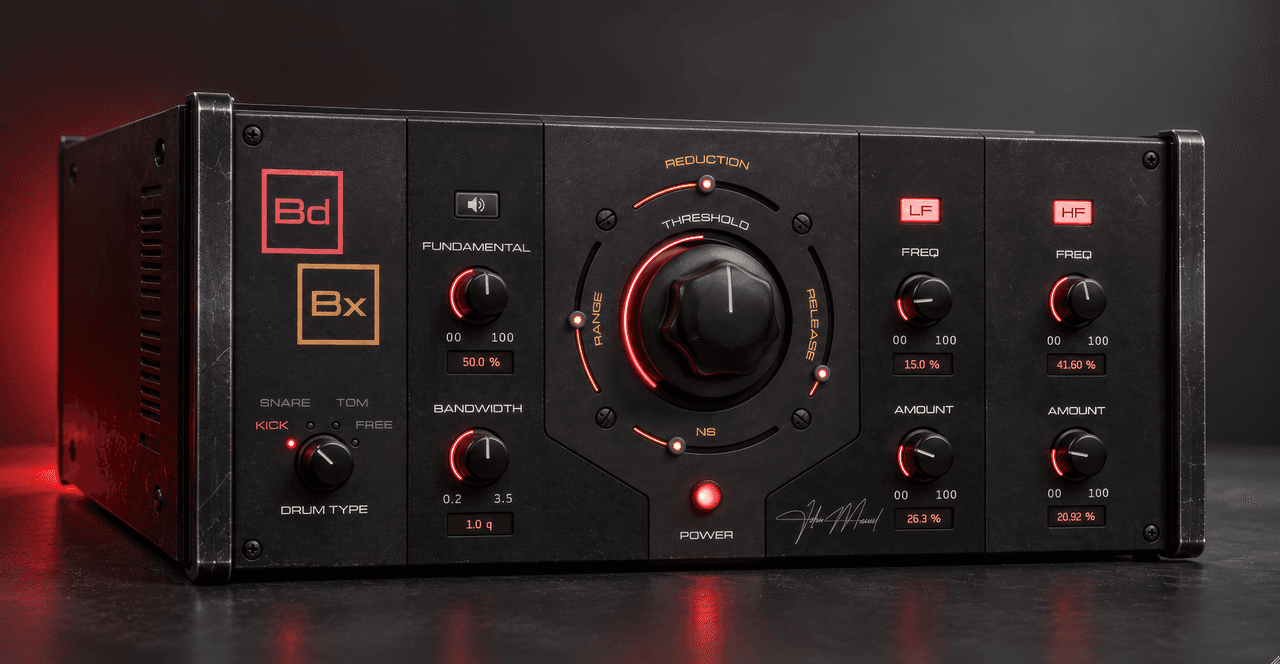
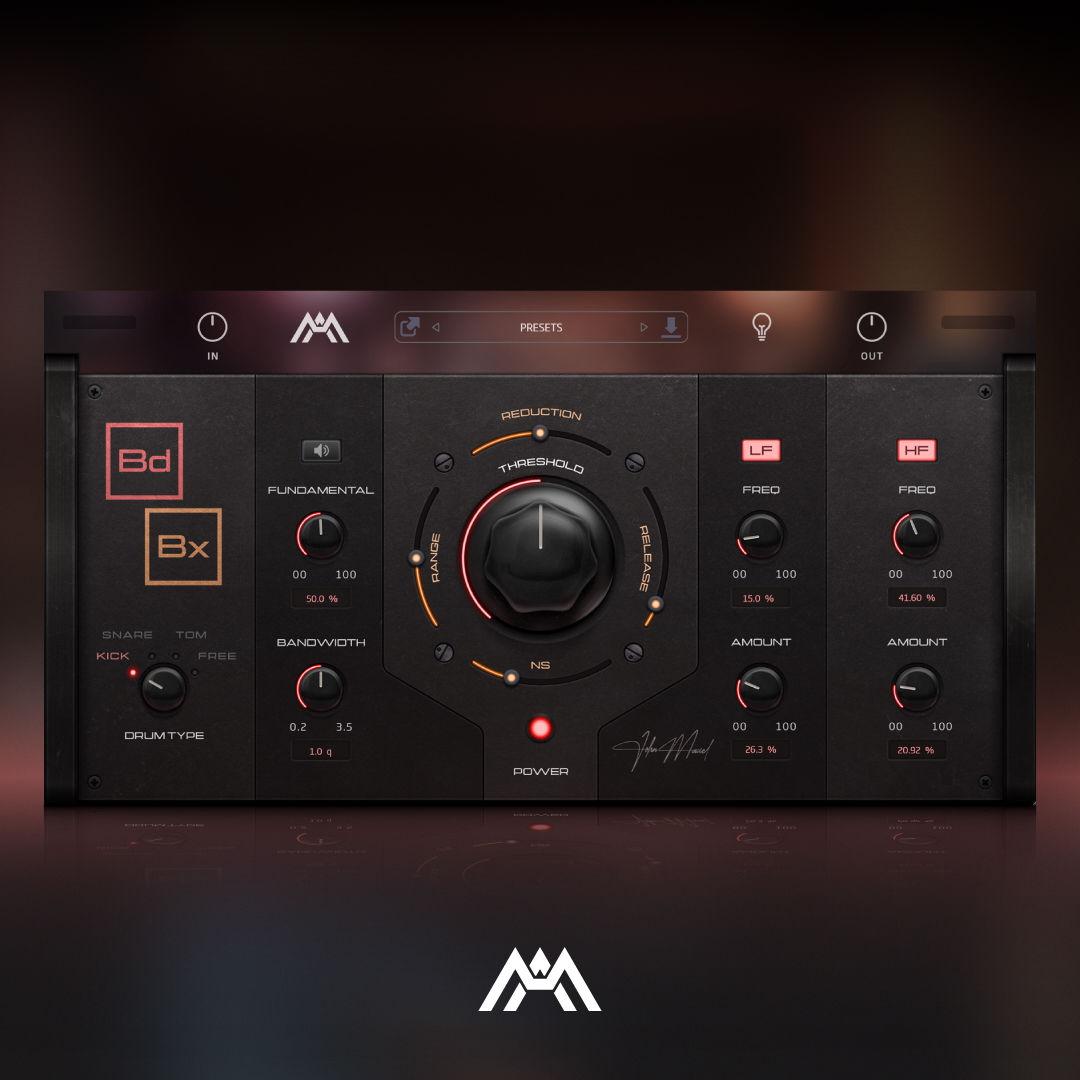
Bleed Box turns down the bleed on your kick, snare and tom mics the way an engineer would with isolation pads in the room. Your drums stay punchy and natural, and your compressors have less to fight. Natural dampening Bleed Box turns the bleed down instead of chopping it off, so each shell keeps its decay and the kit still sounds like one kit. Drum-specific detection Pick Kick, Snare or Tom, and Bleed Box listens with a detector tuned to that drum. Free mode opens up the full range. Keep the sustain you want Bandwidth decides how much ring counts as drum and how much counts as bleed. Boomy toms tighten up, and open snares stay open. Built-in recovery Subtle LF and HF recovery bring back the low end and top that gating can take away, without reaching for another EQ.. Left-to-right workflow The controls run left to right like a rack unit, so by the time you reach the right side, you’re done.
Why Gates Make Drums Sound Choppy
Gates open and close. On real drums, that can leave your shells choppy, transient-heavy and disconnected from the rest of the kit. Then a fill hits that the gate wasn’t set for, and you’re back to fighting it, even with MIDI triggering. Some bleed is what makes a kit sound like a kit. Bleed Box dampens it the way an engineer would with isolation pads or gels in the room, so your drums stay natural and keep their punch.
Tell Bleed Box What to Listen For
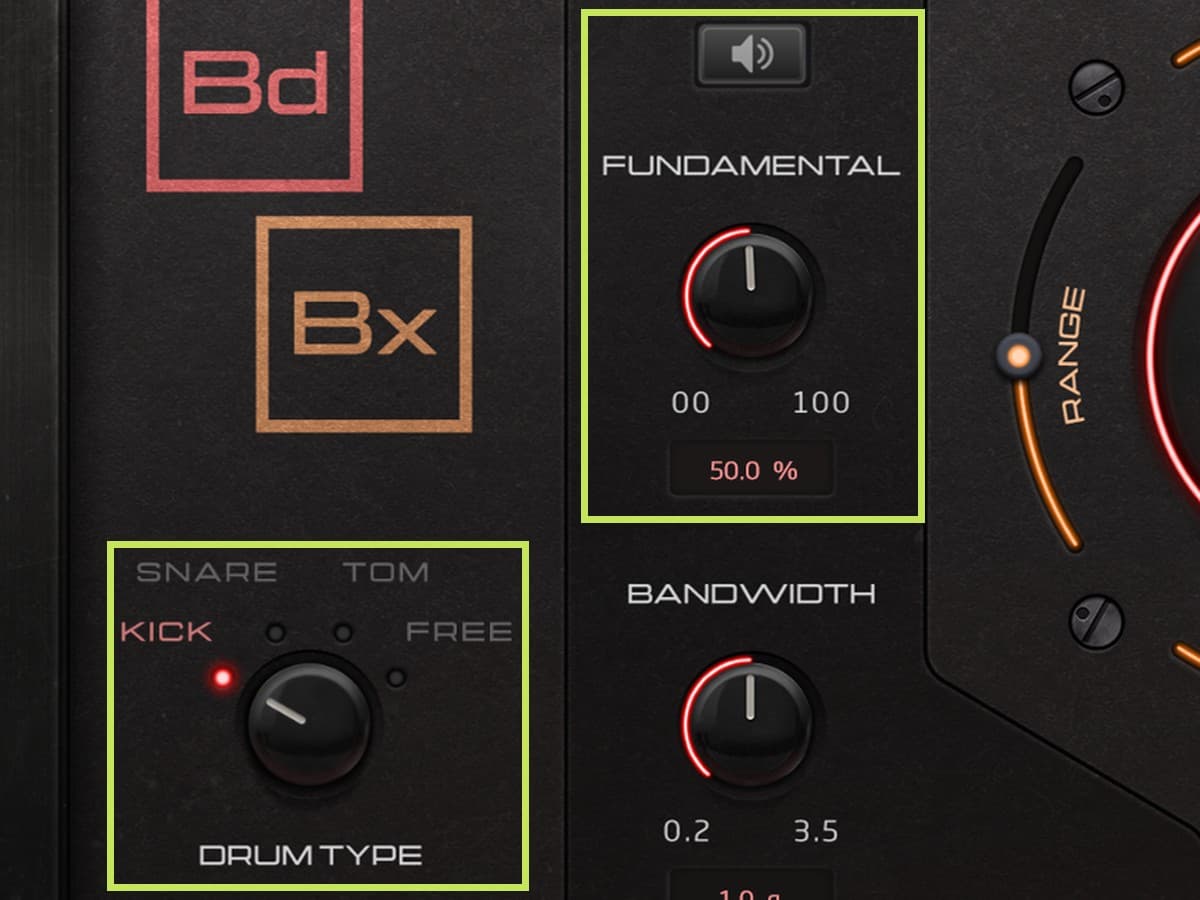
Pick Kick, Snare or Tom, and Bleed Box gives its detector a range tuned to the usual tuning of that drum. Start in the center, move left for lower-tuned drums and right for higher ones, or choose Free for the full range. Then sweep Fundamental with the Listen button on to hear exactly what the detector hears. Once it locks onto the drum, turn Listen off and mix.
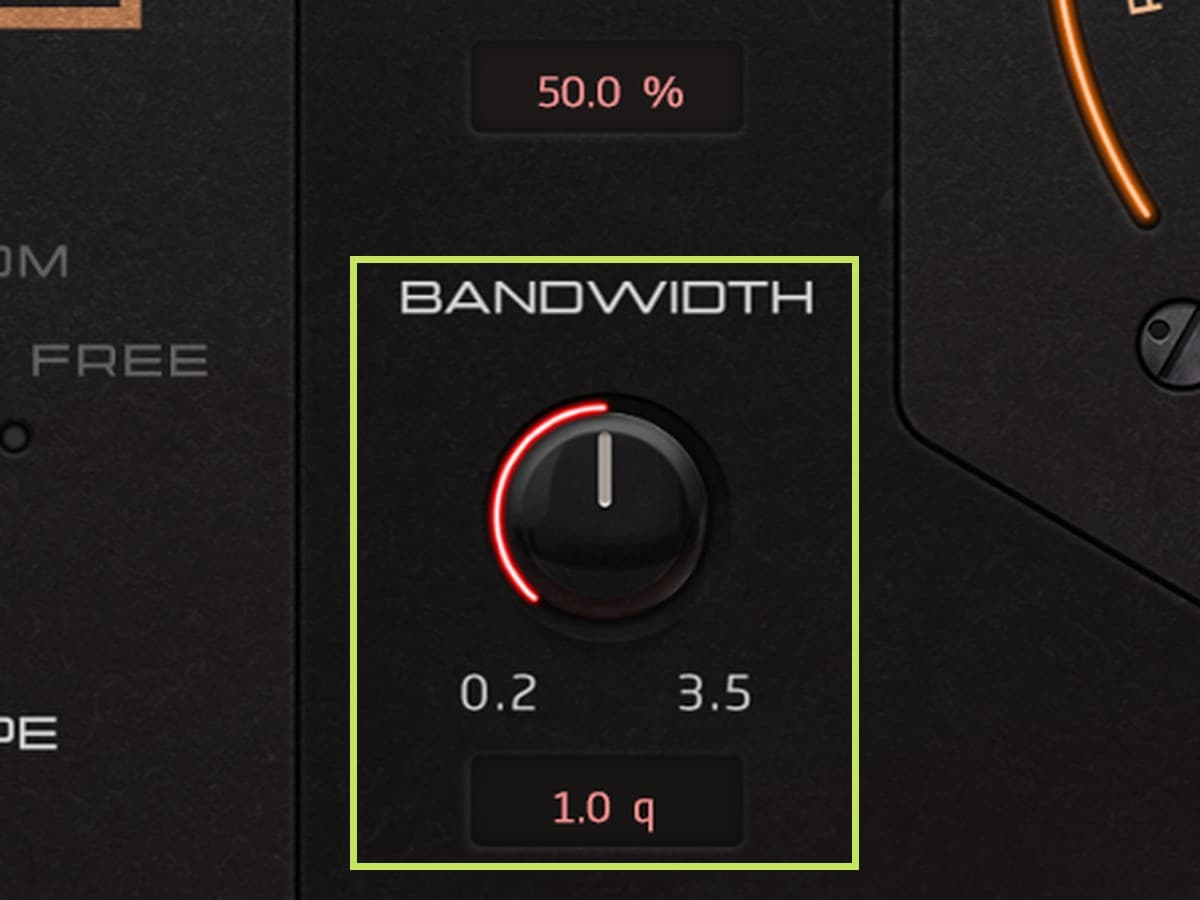
Keep the Sustain You Actually Want
Some drums ring for a reason. If Bleed Box is treating that sustain as bleed, move Bandwidth left to open the detector so it reads the ring as part of the drum. Move it right to tighten the detector and trim more sustain. On boomy toms that already get plenty of low end from the overheads, that cleans things up fast.
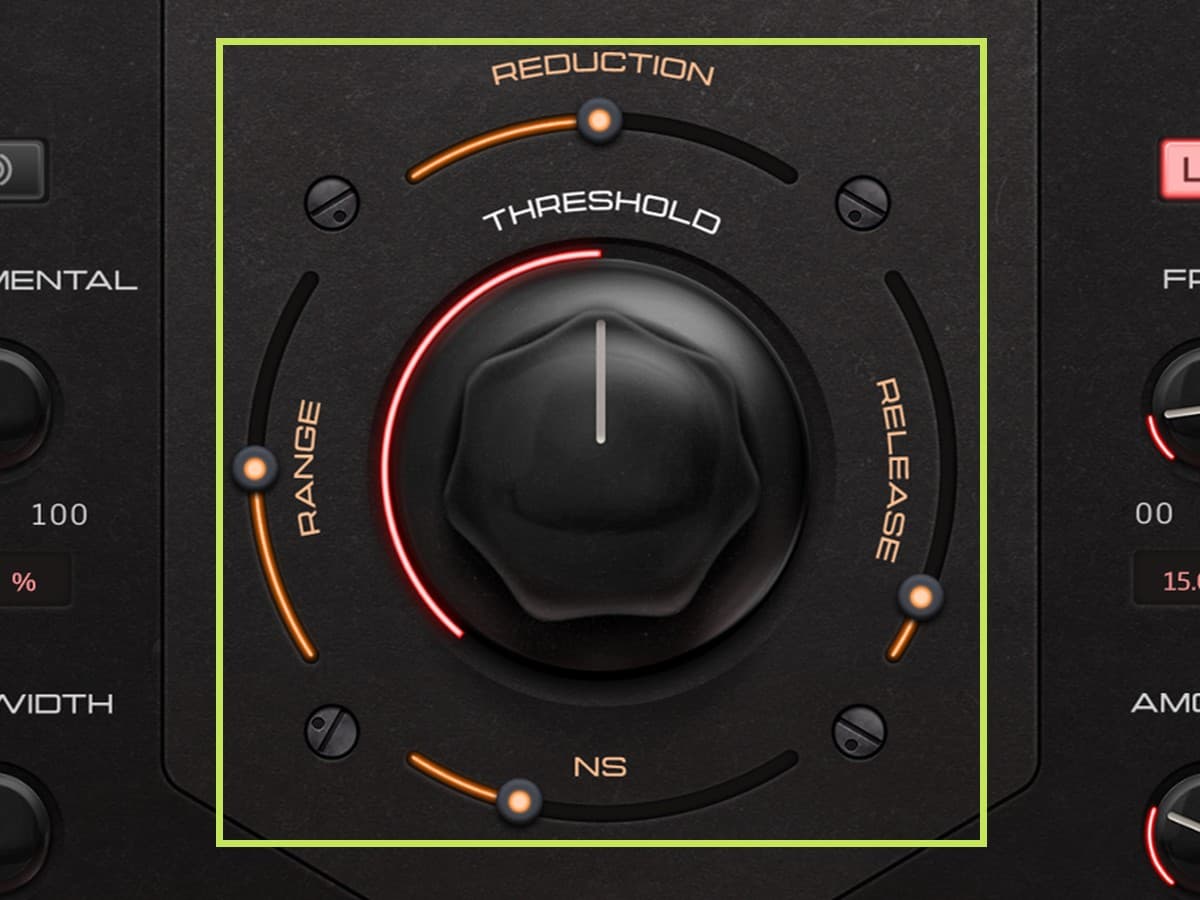
Set How Much Bleed Comes Out
Threshold sets the character, from a harder, more dramatic effect on the left to a more natural sound on the right. Reduction sets how far the bleed is turned down, and it works best kept conservative. Range controls the high-end bleed, Release lets the drum decay longer when it sounds cut short, and NS clears background noise. A little NS goes a long way.
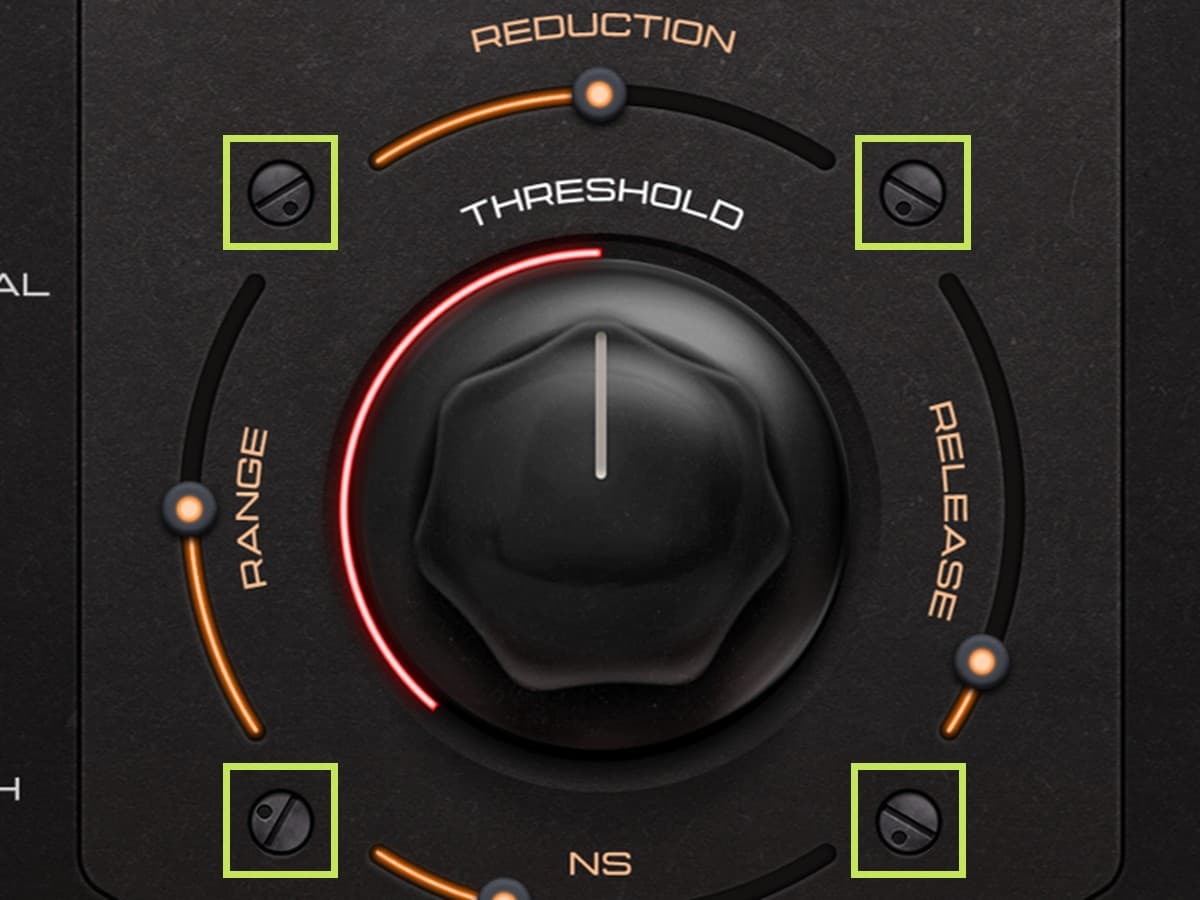
Fine-Tune With the Hidden Screws
The four screws on the faceplate are controls. Hold sets how long Bleed Box stays open. Lookahead defaults to 3 ms, and you can set it to 0 on slower drum parts to remove the latency. Attack is there for intricate, progressive parts and ghost notes. The detector screw rounds out hits that still sound too pokey.
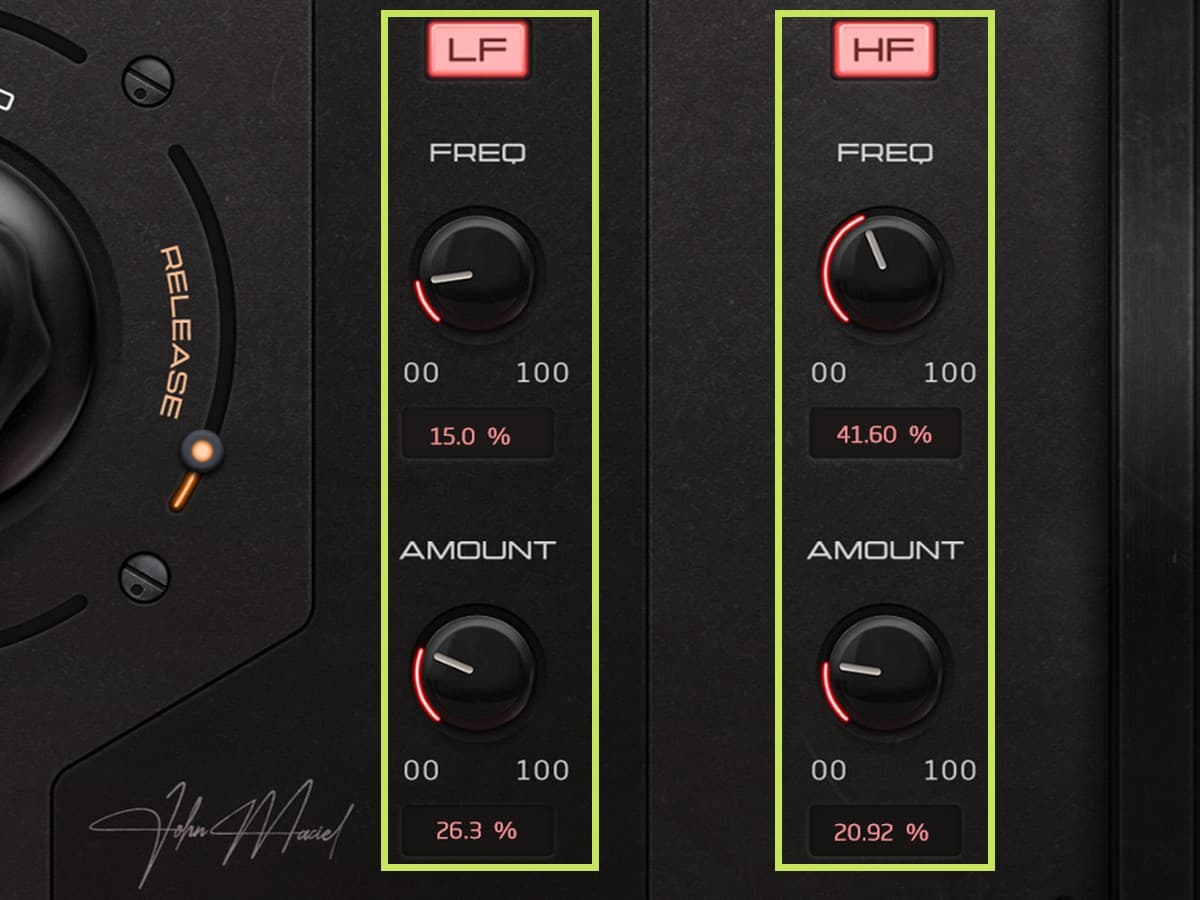
Get Back the Low End and Top Gating Takes Away
Gating can cost you some low end and some top. Instead of adding another EQ, Bleed Box has subtle LF and HF Recovery built in, with a curve you’ll probably recognize. Set the amount, then sweep the frequency to find the sweet spot. It’s subtle on purpose, and a little goes a long way.
 $25 USD
 $25 USD
AAX, AU, VST3 versions
64-bit only
Ableton Live 11+ (Mac & PC: AU, VST3)
Bitwig 4+ (Mac & PC: AU, VST3)
Cubase 13+ (Mac & PC: VST3)
Digital Performer 11+ (Mac & PC: AU, VST3)
FL Studio 23+ (Mac & PC: VST3)
Garageband 10+ (AU)
Logic Pro 10+ (AU)
Pro Tools 12+ (Mac & PC: AAX)
Presonus Studio One 5+ (Mac & PC: AU, VST3)
Reaper 6+ (Mac & PC: VST3)
Cakewalk Next by BandLab (PC: VST3)
AAX is a trademark and software of Avid Technology. Audio Units is a trademark and software of Apple Inc. VST3 is a trademark and software of Steinberg Media Technologies GmbH.
AAX, VST3, AU versions included
64-bit only (Mac / PC)
Mac OS X 10.15 or higher (Intel native | ARM native)
Windows 10
At least 4GB of RAM, 16GB is recommended
At least 200MB of free drive space (OS drive)