Fibonacci Chorus
Ultra-Musical Chorus Built on Fibonacci Numbers
Fibonacci Chorus
Ultra-Musical Chorus Built on Fibonacci Numbers
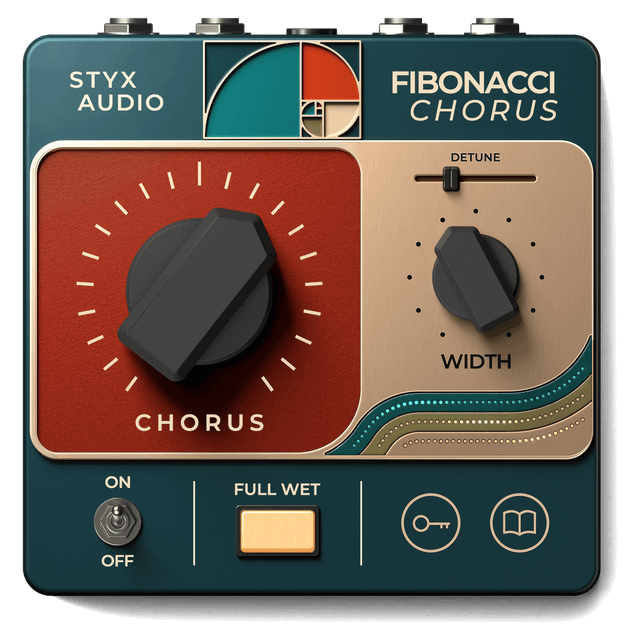
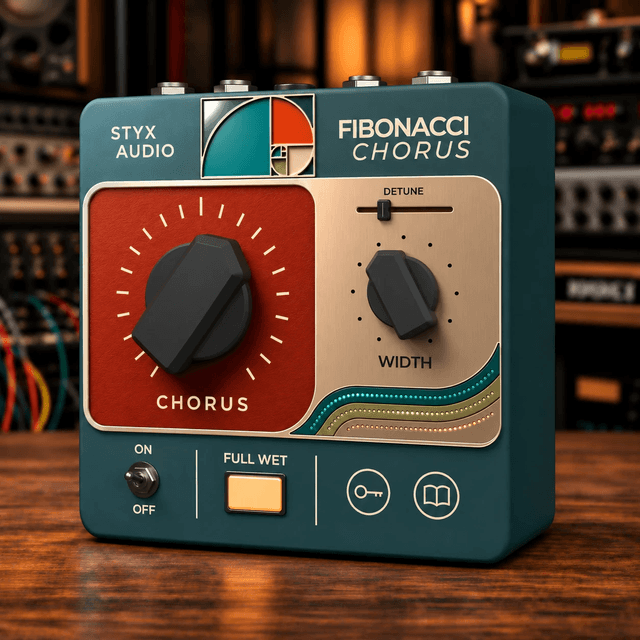
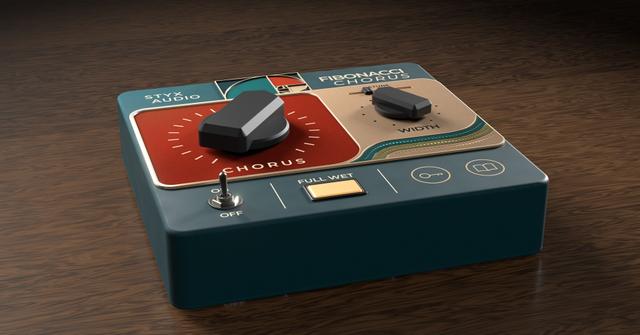
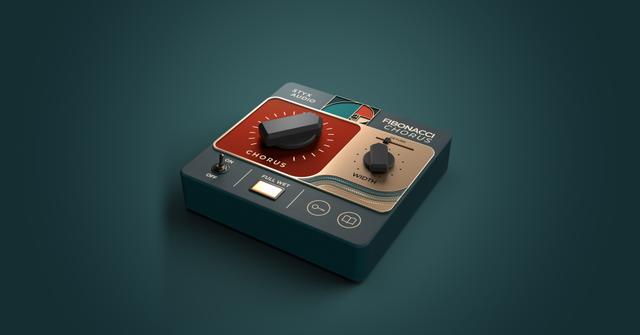
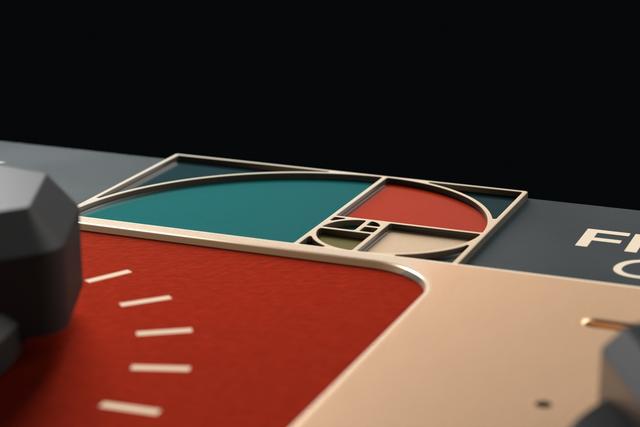
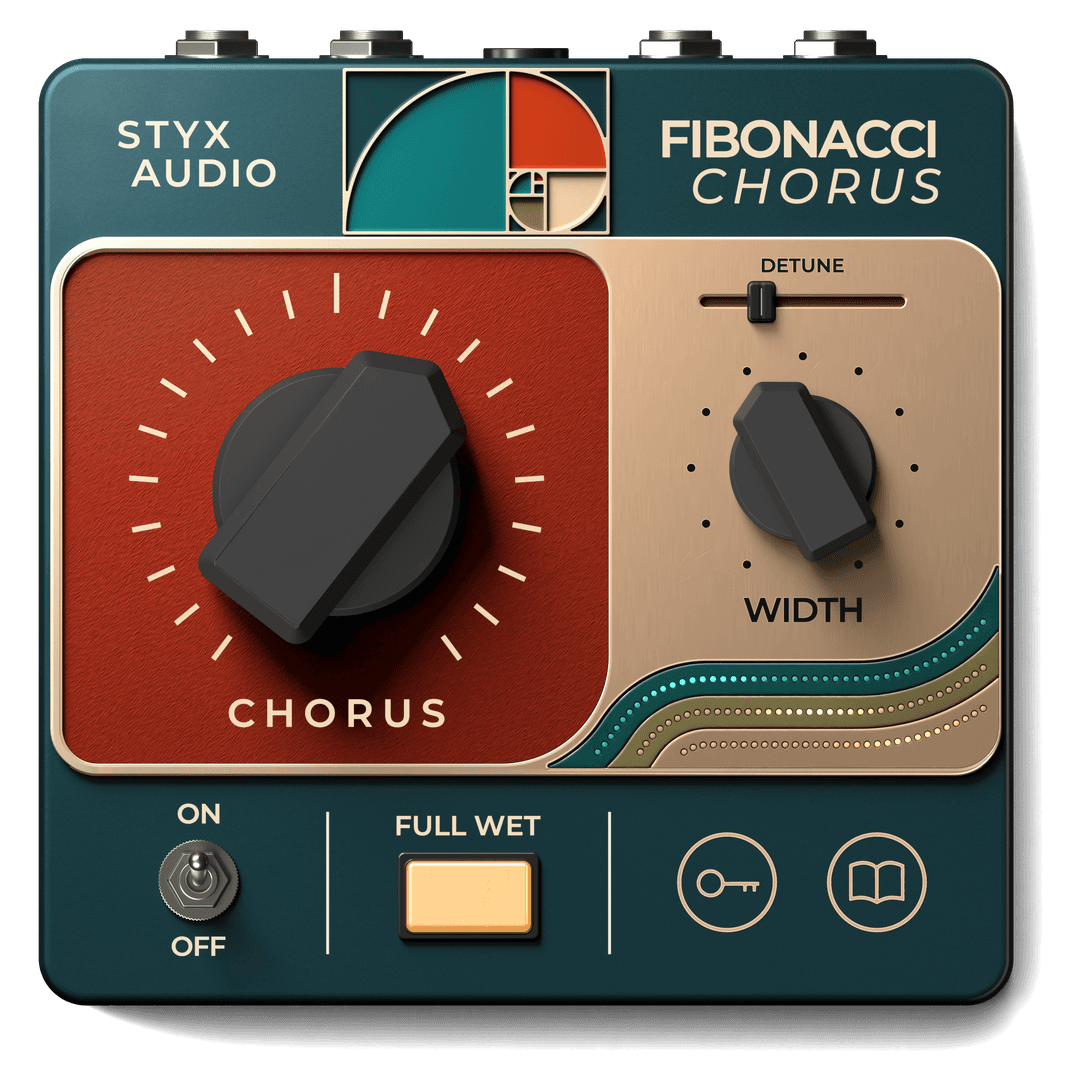
Chorus, doubler and stereo widener in one plugin. Three stereo voices with delay times and modulation rates taken from the Fibonacci sequence. Width, depth and slow, natural movement with no audible loop. Detune thickens it. Full Wet is for sends.
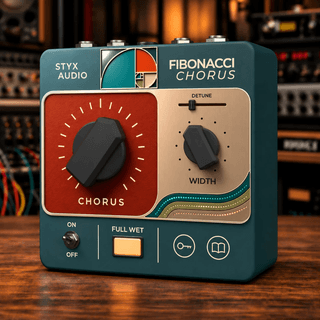
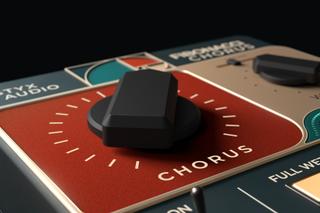

Ultra-Musical Chorus. Built on Fibonacci Numbers.
Three stereo voices, with delay times and modulation rates taken from the Fibonacci sequence.
Width, depth and slow, natural movement with no audible loop. It works as a chorus, a doubler and a stereo widener. Three controls, nothing to set up.
See How Fibonacci Chorus Works
A female vocal first, then a guitar, with bypass comparisons along the way.
With Detune at zero it is one of the most natural chorus sounds you can imagine. Push Detune up and you get a thick, bold doubler. It works on any instrument.
Sound Examples

Why Should I Care About Fibonacci Numbers?
You don’t have to. Skip the math, turn the Chorus knob and listen. It just sounds damn good.
For the curious, here is why. A classic chorus usually runs on one modulator, or on several at the same rate. Its sweep comes round every few seconds, and the ear picks that cycle up quickly. Fibonacci Chorus moves its delays with four modulators, and their rates are four consecutive Fibonacci numbers divided by one hundred: 0.21, 0.34, 0.55 and 0.89 Hz. Each neighboring pair stands in a ratio close to the golden ratio, 1.618. Rates in that proportion do not settle into a simple rhythm against each other, so the combined motion never falls into a short loop. You hear it as slow, natural movement. The sequence 1, 1, 2, 3, 5, 8, 13, 21… carries the name of Leonardo of Pisa, known as Fibonacci, who described it in 1202. It turns up in the seed spirals of a sunflower and the scales of a pine cone. Here it sets the delay times and the modulation rates.
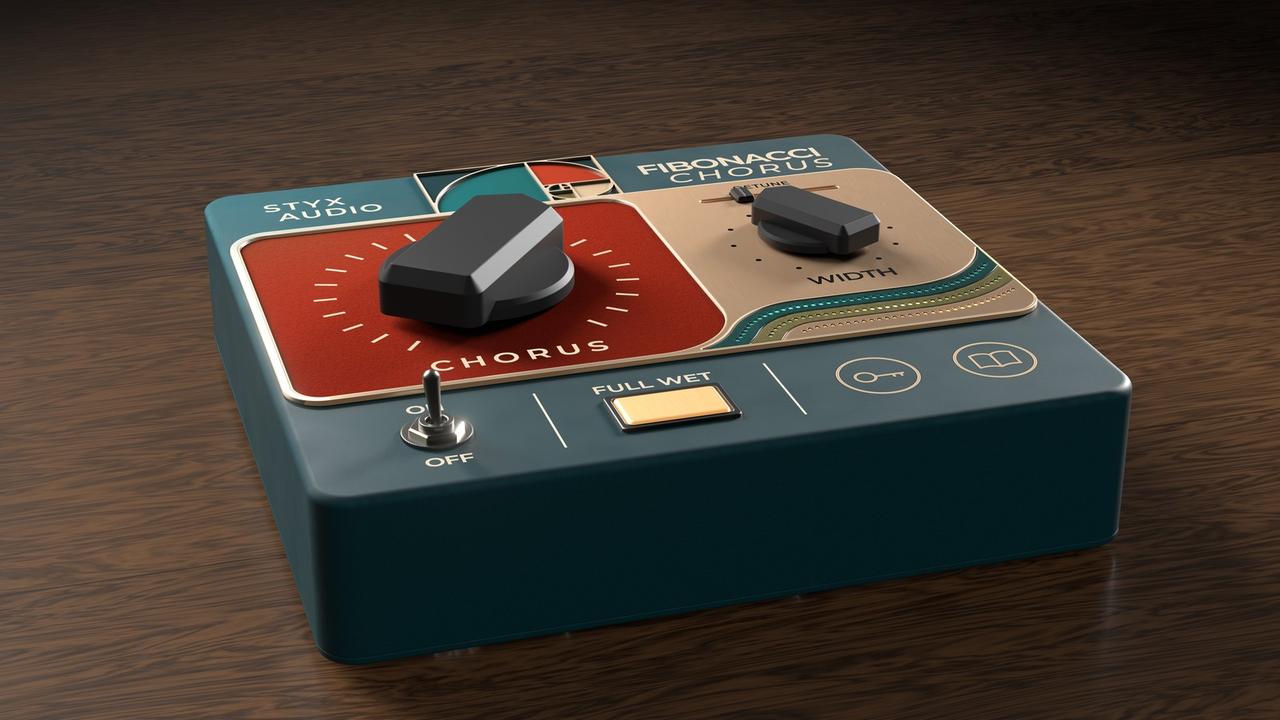
Golden Proportions, Fixed Inside
The proportions follow the Fibonacci sequence and the golden ratio. You set only how much chorus, how much detune and how wide.
Movement Without a Loop. Four modulators at Fibonacci rates, with starting phases spaced by the golden angle, 137.5°. The motion keeps changing instead of cycling every few seconds. Stereo Inside Every Voice. Every voice has different delays and different modulators left and right. A mono source comes out wide; on a stereo source the dry signal stays where it is and the voices add width and depth around it. A Low End That Stays Put. The voices pass through their own filter, so below 100 Hz there is practically only the dry signal. The foundation of the track is not smeared. An Analog-Style Voice Path. The voice path is modeled on an analog one and includes a light saturation stage. The modulation is shallow by design: you hear width and slow movement, without an obvious vibrato.
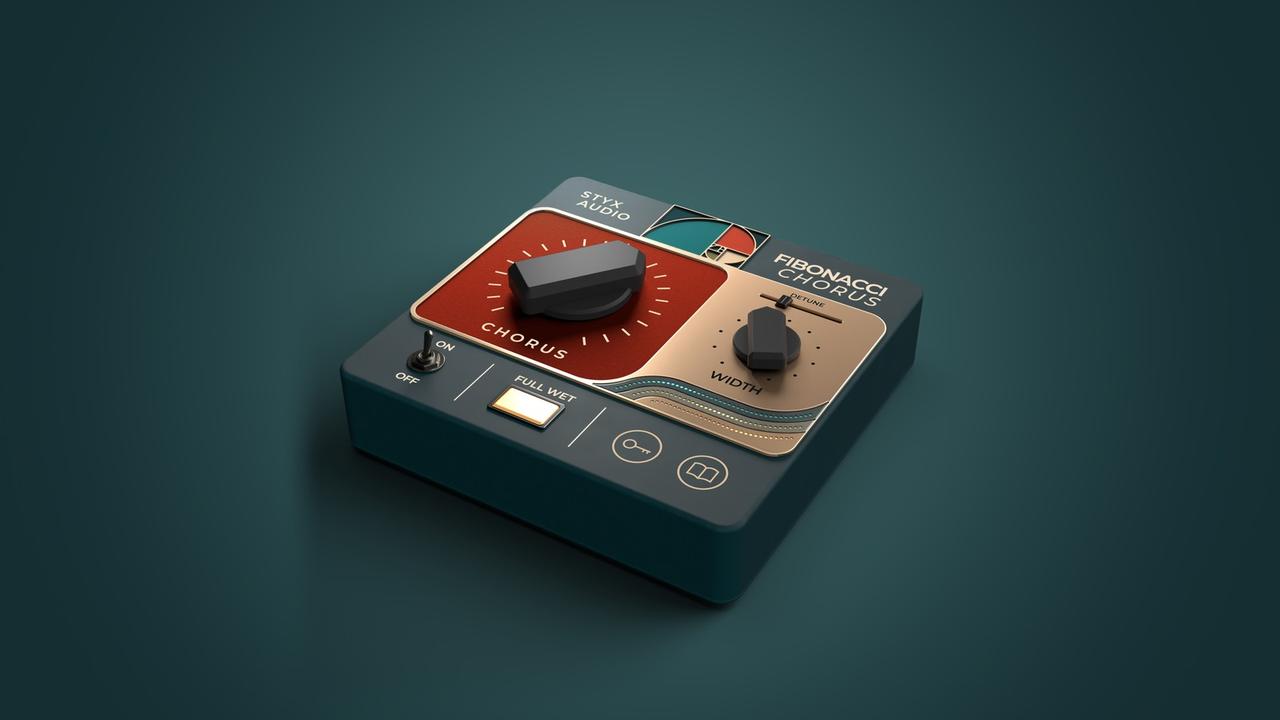
Three Controls. Nothing to Set Up.
Chorus, Detune and Width.
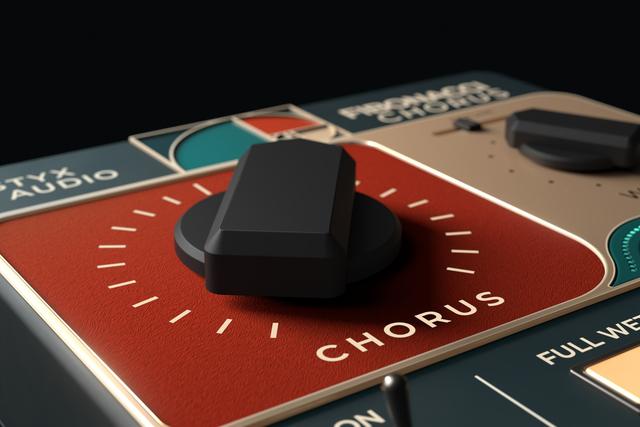
Chorus. Turn it up until the sound opens. At 0 the signal passes unchanged. Detune. Move the slider right for a thicker, more obvious chorus: two detuned copies of the voices, about 20 cents up and 20 cents down. It keeps the effect audible on phones and small speakers. Width. Set the stereo spread of the voices, from mono to 200%. The dry signal is not affected. On a send, switch on Full Wet and set the amount with the send level.
Use It Anywhere in the Mix
Single tracks, groups, buses and sends. It also works as a doubler and a stereo widener.
Stereo widener: a mono source comes out in stereo. Doubler: Detune adds detuned copies for a thicker, doubled part. Vocals and backing vocals: a low Chorus setting gives width without an obvious effect. Guitars, keys and synths: more Chorus, Width to taste. Bass: the foundation does not move. Groups and buses: keep Chorus low. Programmed and heavily quantized parts: a small amount adds the slow movement they lack. After a reverb or a delay: width and movement on the processed signal. Send/return channels: Full Wet removes the dry signal. Like any chorus, it changes the tone when the mix is summed to mono. At high settings, check the balance in mono. Try Fibonacci Chorus free for 14 days and hear what it does in your own mix.
AAX, AU, VST3 versions
64-bit only
Ableton Live 11+ (Mac & PC: AU, VST3)
Bitwig 4+ (Mac & PC: AU, VST3)
Cubase 13+ (Mac & PC: VST3)
Digital Performer 11+ (Mac & PC: AU, VST3)
FL Studio 23+ (Mac & PC: VST3)
Garageband 10+ (AU)
Logic Pro 10+ (AU)
Pro Tools 12+ (Mac & PC: AAX)
Presonus Studio One 5+ / Fender Studio (Mac & PC: AU, VST3)
Reaper 6+ (Mac & PC: VST3)
Cakewalk Next by BandLab (PC: VST3)
AAX is a trademark and software of Avid Technology. Audio Units is a trademark and software of Apple Inc. VST3 is a trademark and software of Steinberg Media Technologies GmbH.
AAX, VST3, AU versions included
64-bit only (Mac / PC)
Mac OS X 10.15 or higher (Intel native | ARM native)
Windows 10
At least 4GB of RAM, 16GB is recommended
At least 200MB of free drive space (OS drive)
Customer reviews
Own this product? Sign in to write a review
No reviews yet. Only people who bought this product can write one.
More from Styx Audio
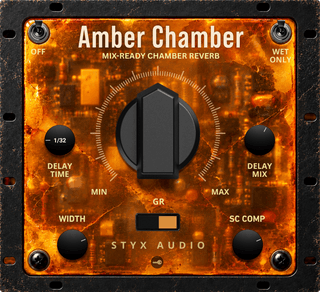
by Styx Audio
Dirty in the right way. A character chamber reverb with the vibe of the iconic '60s and '70s studios, prepared for the mix but never sterile. Tempo-synced Parallel Tape Delay, built-in ducking, and Width from '60s mono to full stereo.
by Styx Audio
All-in-one channel strip: filters, gate, nine saturation circuits, double-stage compressor, console EQ with Air, de-esser, stereo tools, clipper, limiter and Level Match. A Mix control on every module. 500+ hand-crafted presets.
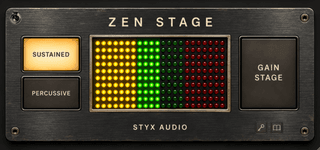
by Styx Audio
Zen Stage sets the level of any track to the optimal input for your plugins with one press. Two modes, a four-second measurement, a safety limiter. Gain staging under control.
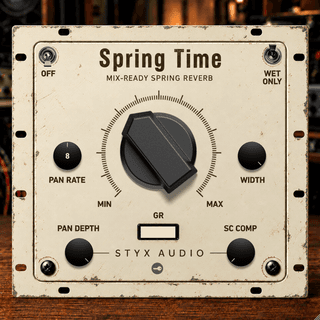
by Styx Audio
Dirty, but mix-ready. Two complementary springs give this reverb a wide, lively stereo image, while tube and tape saturation add grit. Built-in ducking keeps it out of the way of the dry signal, and wet-only autopanning adds movement without extra routing. Turn Width to zero for classic mono.
Similar products
by JVAL Audio
Based on a classic delay trick, Stereoize takes a mono signal and turns it into a wide, textured stereo sound.
by DSPTone
Several delay eras combined into one, from vintage modulation echoes to wide modern rhythmic textures, offering chorusing, flanging, doubling, and expressive delay. Inspired by classic digital hardware and modern modulation design.
by Smart Audio Solution
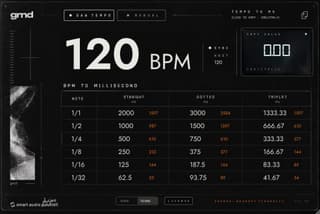
A simple BPM Reader/ converter in Millisecond and Fibonacci closest value
Bundles with this product